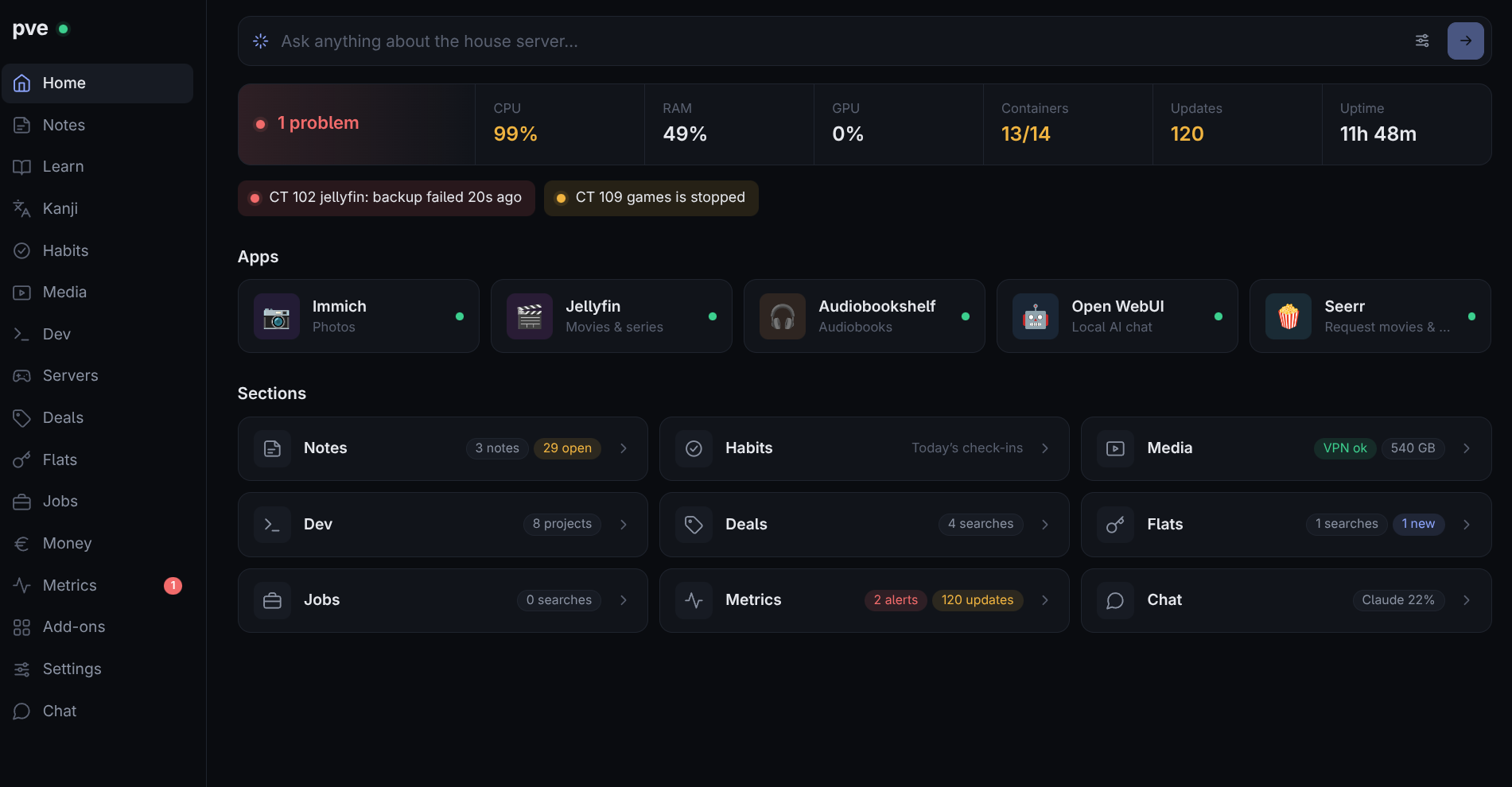
My desktop PC turned home server, run from a dashboard I built myself that has quietly grown into a small platform with its own add-on marketplace.
- Nuxt dashboard with metrics, backups, alerts to Discord, and two assistants: a local LLM that can only propose allowlisted actions, and Claude Code on the host
- Smaller add-ons like money tracking and an offline-first habits PWA with its own sync protocol
- One script sets the whole thing up on a fresh Proxmox host; one command creates a fully provisioned dev box
How it started
Just for fun. Then it became the thing I use every single day: my photos, media, books, local AI and every dev environment I work in live here.
The machine
My desktop PC, an HP OMEN 25L: Intel Core i9-11900, 64 GB of DDR4 and an RTX 3060 that runs the local AI models.
One dashboard for everything
The front door to all of it is a dashboard I built: the apps I open, CPU and GPU load, backups, open ports, alerts.
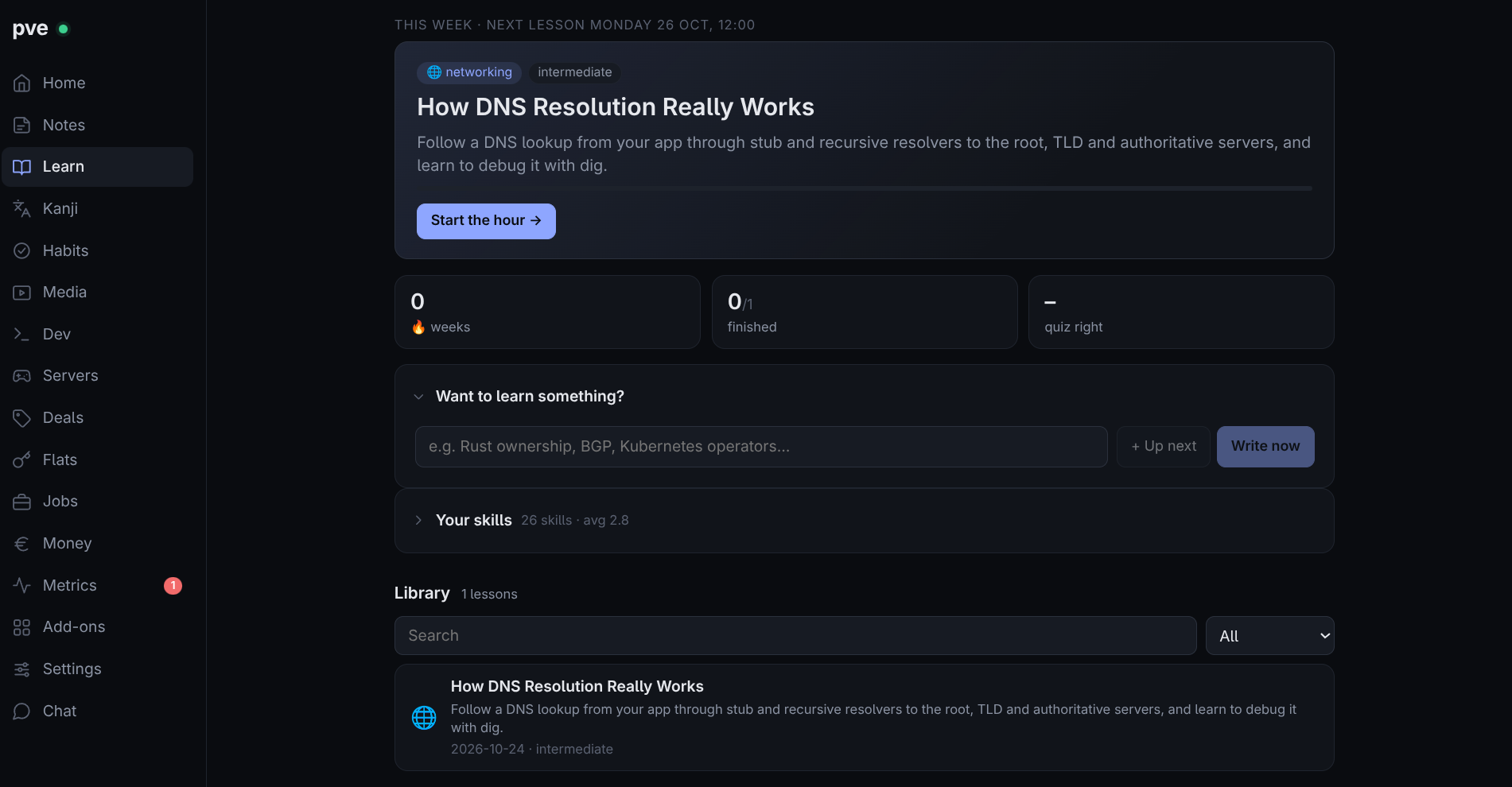
Then it got out of hand, in a good way. Apart from Home, Metrics and Add-ons, every tab is now an add-on: a folder with a manifest, a Nuxt layer for the UI and Python modules for the backend. Add-ons can be installed, updated, switched off or removed from a built-in marketplace. A fresh Proxmox host can be set up from scratch with one install script, and --dry-run shows what it would do without touching anything.
Two assistants, two levels of trust
Letting AI run commands on the machine that holds all my photos needs some care, so the two assistants get very different permissions:
- The ask bar talks to a local model with a snapshot of what’s on the page. It can only suggest actions from a fixed list. I press Run, and the agent checks the action and every argument again before anything happens.
- Claude Code runs on the host itself. By default it only gets a fixed list of read-only commands; anything more is a mode I switch on deliberately.
Locked down
Only my own Tailscale login gets past tailscale serve, every API route needs a PIN cookie, and writes have to come from the dashboard’s own origin.
Gallery